Those persons who are in Christ recognize their spiritual poverty, mourn over their sin, and walk in meekness. We must examine our own hearts, deal seriously with sin, extend grace to others, and glorify God in every circumstance. True meekness is not weakness, but strength under control that marks those who belong to the kingdom of heaven, and imitates the way Jesus lived and acted – even when He was mistreated.
Satan is alive and active, and he is out to deceive us. We need to be sober and aware of our weaknesses, because that is where Satan will trip us up most. We need to be watchful for the traps he has laid for our souls. He tries to accuse us, make us doubt, and twist the truth. We must resist him by keeping our eyes fixed on Christ, putting on the whole armor of God, and helping and encouraging one another in the Church. Satan is an adversary, but if we are in Christ, we cannot be stolen away from Jesus' hands.
Our culture tends to prize a spirit of pride and refusal to submit to anyone, but God calls His people to something different: humility. Peter exhorts young men, in particular, to submit to their elders, for it is common for them to show resistance to authority.
But the command also extends to all believers, who are to clothe themselves with humility. True biblical submission isn't begrudging compliance. It's an inward humility, modeled after Christ, who served His disciples, submitted to His Father, and walked in obedience, even to death.
We are called to humble ourselves under the mighty hand of God, trusting in His sovereign care, even when life is filled with suffering. We can cast our anxieties on Him, acknowledging that He cares for us and knows what is best. The Lord resists the proud, but He gives grace to the humble; and in due time, He will exalt those who follow the path of Christ-like humility.
Peter makes it clear that elders in the Church are to shepherd and disciple the flock of Jesus Christ – not rule over it or govern it, but to care for it. They are not to shepherd by compulsion, or to enrich themselves, or to lord it over the sheep as spiritual tyrants. Elders are to faithfully shepherd the sheep by following Christ first in their own lives and being an example for the flock, seeking the smile and approval of the Chief Shepherd when He appears. The Lord Jesus is glorified when His elders shepherd His people in a caring way.
Suffering is an inevitable part of the Christian life, but not all suffering is the same. Peter warns us that some suffering results from sin, and this kind of suffering is justly deserved. However, suffering for the name of Christ is entirely different. Those who endure hardship for their faith should not be ashamed, but should glorify God. Peter also reminds us that suffering serves the purpose of purifying and strengthening our faith.
If you're suffering in your life, ask yourself why. If it's for your own sin, repent of it and turn away. But if you're suffering for the name of Jesus Christ, do not be ashamed, but rejoice and praise God!
Cain hated his brother Abel because his own works were evil and his brother's were righteous. He was envious of Abel, and envy is always sinful and is a characteristic of the devil. His envy led to unrighteous anger and finally murder.
Anger is a grievous sin that is an effect of the Fall, resulting in our thoughts and emotions being out of sorts. God desires for us to examine ourselves and to repent of our envy and anger toward our brothers and sisters.
Sometimes we think it's strange that we might suffer for our faith. But these trials and oppressions that come to us specifically because of our Christian faith will bring us joy, because they bring us closer in our relationship with Jesus.
Christ promised that we would have peace, but not ease. He promised that He would give us His presence, but not prosperity. Suffering for Jesus hurts; but in Him, we can find and remember our ultimate joy.
What we believe about the future will impact the way we live our lives today. Do you live your life as if the Kingdom of God is here now? As we live in these last days, waiting for the return of Christ, our lives should be marked by sober living in fervent prayer, love and hospitality, and stewardship of our gifts for serving Christ and His Kingdom.
Being a Christian often requires being counter-cultural – and that is offensive to many. God calls us to walk in a way that is different from the "norm" of this world.
We are not under the tyranny of sin anymore. The question is, what are we spending our lives on? What do we desire? The sinful "pleasures" of the world or the will of the Lord? Upon what are we spending the currency of our time? There are two paths to choose from: the path of least resistance, or the path of following Christ – and suffering and maybe even dying like Him.
Christ suffered persecution at the hands of the world, and we must arm ourselves with the same mind that He had – expecting to receive nothing less than He experienced. The world may hate and kill us, yet we will still live. But who are we living for?
We were born to be like Jesus – and Jesus suffered. As we go through pain and turmoil, the Lord is refining and shaping us.
Jesus suffered for a reason: to bring us to a reconciled relationship with God. His suffering was necessary to pay for our sins and become our Substitute. And He triumphed over death and become the exalted King over everything.
Do trials seem to be out of control in your life? What consumes your thoughts? Your problems that you are facing today or your King Who lives and reigns forever?
God is completely faithful, and all His promises find their fulfillment in Christ (2 Corinthians 1:20). While human promises often fail, God never wavers; His covenant of grace is not a contract but a divine commitment. In this passage, Paul defends his integrity to the Corinthians – not by focusing on himself, but by pointing his readers to the trustworthiness of God's promises. The Holy Spirit serves as our guarantee, assuring us that God will complete His work in us. Our response should be a firm "Amen," living in faith and reflecting His faithfulness in our integrity, commitments, and daily walk. In a world of broken promises, we can proclaim that in Christ, God's promises are always Yes and Amen.
There are two extremes when looking at this passage before us. One extreme is that baptism literally saves you, period. And the other extreme is that it literally does nothing.
What is the middle ground here? Baptism is a sacrament that binds the believer to God and God to the believer. The water is just a sign, but what does it represent? It's a sign of our being born again. It's not a magic superstition; it represents us being united with Jesus. The Holy Spirit uses the sacrament to work spiritual blessings within us sealing us to be His.
We must remember to not trust the sign of baptism alone, for the Holy Spirit must be applied to cleanse us from the sin in our heart. Also, we must look to Jesus as our only hope. He washed us in the water of regeneration and that is why we can stand before God. He has cleansed us, so we must hate sin, love something better, and live for God's glory.
How was Noah "saved through the water," and how does that tie in with baptism?
The same waters that drowned the wicked unbelievers also lifted up the Ark and saved Noah and his family.
Both the Flood and baptism show us judgment and salvation, simultaneously. The building of the Ark was salvation for Noah's family but it also proclaimed judgment to the evil world. In baptism, we are reminded that our sins were judged and laid upon Christ. In Him, we are cleansed; and in Him, we find salvation.
The Lord really does take sin seriously. He is patient but He won't wait forever for us to repent. Ruin will eventually come. Where will we be on that day of judgment? Will we be safe in Christ, our Ark? Or will we be on our own like the unbelievers in Noah's day?
If we are in Christ, the true Ark of our salvation, we don't have to fear Judgment Day. If we have trusted in Him and His promises, there is safety and hope for us!
Sometimes we can get to places in the Bible where we are lost and misoriented. There are passages that are hard to understand, and this is one of them. We must strive for clarity because even the hard parts of God's Word are profitable to teach and instruct us.
Who are the "spirits" that Peter refers to in these verses, and what is the "prison"? Are they the disobedient human beings in Noah's time who refused to get into the Ark after decades of Noah's preaching? Or are they evil spirits, to whom Jesus proclaimed the victory of His work of redemption for lost souls?
We must use the plain passages in God's Word to interpret the hard places in God's Word. We can't use our imaginations to create what we want to read out of the Scriptures. We are also reminded here to get into the Ark of salvation now because no evil will escape God's righteous judgment. Do not wait until "someday" to believe – trust in Jesus now!
In verse 11 of this chapter, we are called to turn away from evil and do good, and we are assured that the eyes of the Lord are upon those who are righteous. But how is this supposed to be a comfort to us when not one of us can dare to claim any righteousness of our own?
Verse 18 brings us hope because it reminds us that Christ suffered for our sins. Unlike us, He was just and perfectly righteous and never sinned. We are Law-breakers, but He is the great Law-Keeper. He suffered for us who are unjust, so that He might bring us near to God.
The life, death, and resurrection of Jesus are the onlu reason that we can have hope and comfort in this life!
God desires to give us good gifts and blessings. How do we obtain these blessings? Through a relationship with Him. If we seek true happiness in anything outside of Him, we will be sadly disappointed. That's why we should go to God's Word and soak in the life-giving water for our souls so that we will grow in our relationship with Him and bring forth good fruit. Let's start this New Year by watering ourselves with the Word of God!
Discover the amazing truths of Isaiah 9:6-7 in this Christ-centered sermon. Explore the prophecy of Jesus Christ, the Wonderful Counselor, Mighty God, Everlasting Father, and Prince of Peace, who reigns with justice and eternal authority. Delve into how Christ's birth, life, death, and resurrection fulfill God's promises, offering believers peace, hope, and salvation. Reflect on the joy and awe of Christ's reign and His role as King over all nations, bringing light and peace to a world in darkness. Experience the transformative power of God's Word through this timeless message.
This passage exhorts us to endure suffering for righteousness' sake, finding our hope, peace, and joy in Jesus, who secures our eternal blessing. Peter reminds us that no harm can truly befall us, that will separate us from the love of the Lord. We are called to sanctify Christ in our hearts, remain unafraid of threats, and always be ready to give a reasonable defense for our hope in Him, with gentleness and reverence. Our actions and attitudes should reflect the transformative power of the Gospel. Even in the face of persecution – such as that which was endured by the martyrs in bygone centuries – our hope in Christ endures, bringing glory to our God and pointing others to our Savior.
This passage calls believers to reflect Christ-like attitudes and actions in their relationships, even amidst conflict or suffering. Christians are exhorted to break cycles of retaliation, choosing instead to bless others and entrust justice to God instead of relying on personal vengeance. Moreover, believers are urged to seek peace actively, to refrain from evil speech, and to pursue righteousness in word and deed – trusting in God, who listens to the prayers of the righteous and opposes those who do evil. We are challenged to reflect Christ's character in every interaction, seeking reconciliation and extending God's blessings, even to those who oppose us. Sometimes it is very difficult; but it is a Christ-like way to live, pointing others to the transformative power of the Gospel of Jesus.
As sojourners and pilgrims in the midst of a wicked world, Christian husbands are to behave in a way that is very different, following in the footsteps of Jesus Christ. They are to live with their wives in an intentional and considerate way, with thoughtfulness, patience, and an awareness of their needs. As the "weaker vessel" physically speaking, wives are to be protected by their husbands, who have been given physical strength by God for this very purpose, not for intimidation or abuse. Despite functional differences in their roles, husbands and wives are equal in their standing before God; both are co-heirs of the covenant of grace, sharing the blessings of salvation and the hope of eternal life. Husbands are also solemnly warned that their failure to honor and love their wife can disrupt their own relationship with God.
Christian husbands must lead their homes in a way that brings Jesus glory. It is a blessing to live out the Gospel in front of your wife and children, by the power of the Holy Spirit!
In this portion of 1 Peter, he calls Christian wives to a radical and countercultural idea: to be submissive to their own husbands as an expression of their faith in the Lord. This submission is never a call to endure abuse, but it is a voluntary act of hope in the Gospel. The meek, Christlike conduct of a believing wife can be a powerful testimony that may lead to an unbelieving husband's salvation. Christian wives are also called to find their worth, not in cultural standards or appearances, but in their identity as one who is chosen, beloved, and precious in the sight of God, with an imperishable inheritance in Jesus.
Christ's people are called to live in submission to earthly authorities, sometimes even enduring unjust suffering. In this part of his letter, Peter writes to household servants, urging them to submit to their masters, whether kind or harsh, out of reverence for God. Our submission mirrors Jesus, Who is the ultimate example of enduring unjust suffering. Just as He bore our sins without sinning Himself, believers are to endure wrongs, trusting in God's justice and ultimate vindication. Through His substitutionary atonement, Jesus redeemed us from our sins and calls us to follow His footsteps. When we endure suffering for His sake, we testify to the world of His grace, and we hold fast to the hope of eternal life, knowing that our Savior has walked this path before us.
In this passage, Peter addresses the challenging concept of submission to authority, urging believers to submit to all lawful civil authority for the Lord's sake. Although submission may seem countercultural to our society that values freedom and independence, our submission is not merely to human authorities; it is an expression of our faith in God's sovereignty. Peter also provides four pillars of Christian conduct: honor all people, love the brotherhood, fear God, and honor the king. While submission to the governing authorities has limits – especially when we are called to obey God rather than men – we as Christians are called to be witnesses to the Gospel through our integrity and peaceful submission. Jesus Himself exemplified this, submitting to human authorities even unto death, which ultimately accomplished our salvation. By following His example of submission, we trust in God's higher plan and bring glory to His name in a watching world.
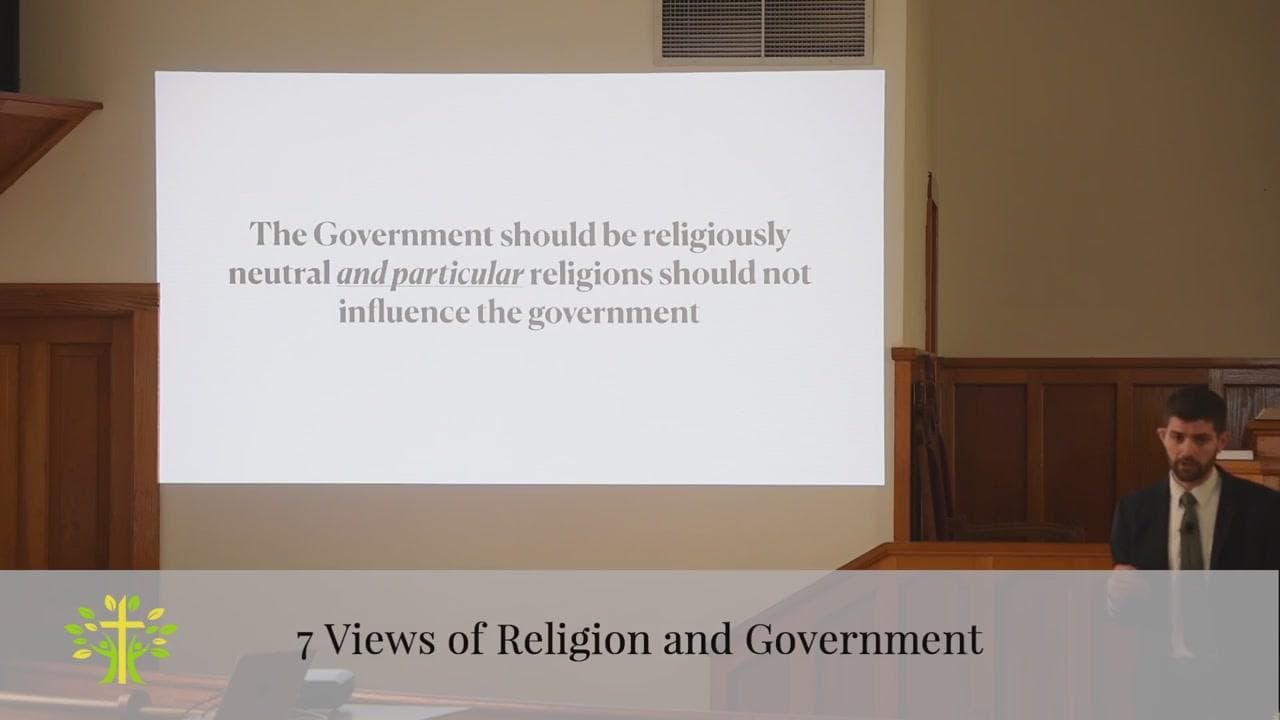
This historical theology lecture was adapted from Andy Naselli's article "What Is the Spectrum of Major Views on Political Theology? A Proposed Taxonomy of Seven Views on Religion and Government."